Food Stall Checklist: Licences, Hygiene, Packaging and Setup
MN Events · Sep 1, 2026
A successful food stall needs more than a good menu. Use this checklist to prepare approvals, food safety, packaging, equipment, service and cleanup before your next event.
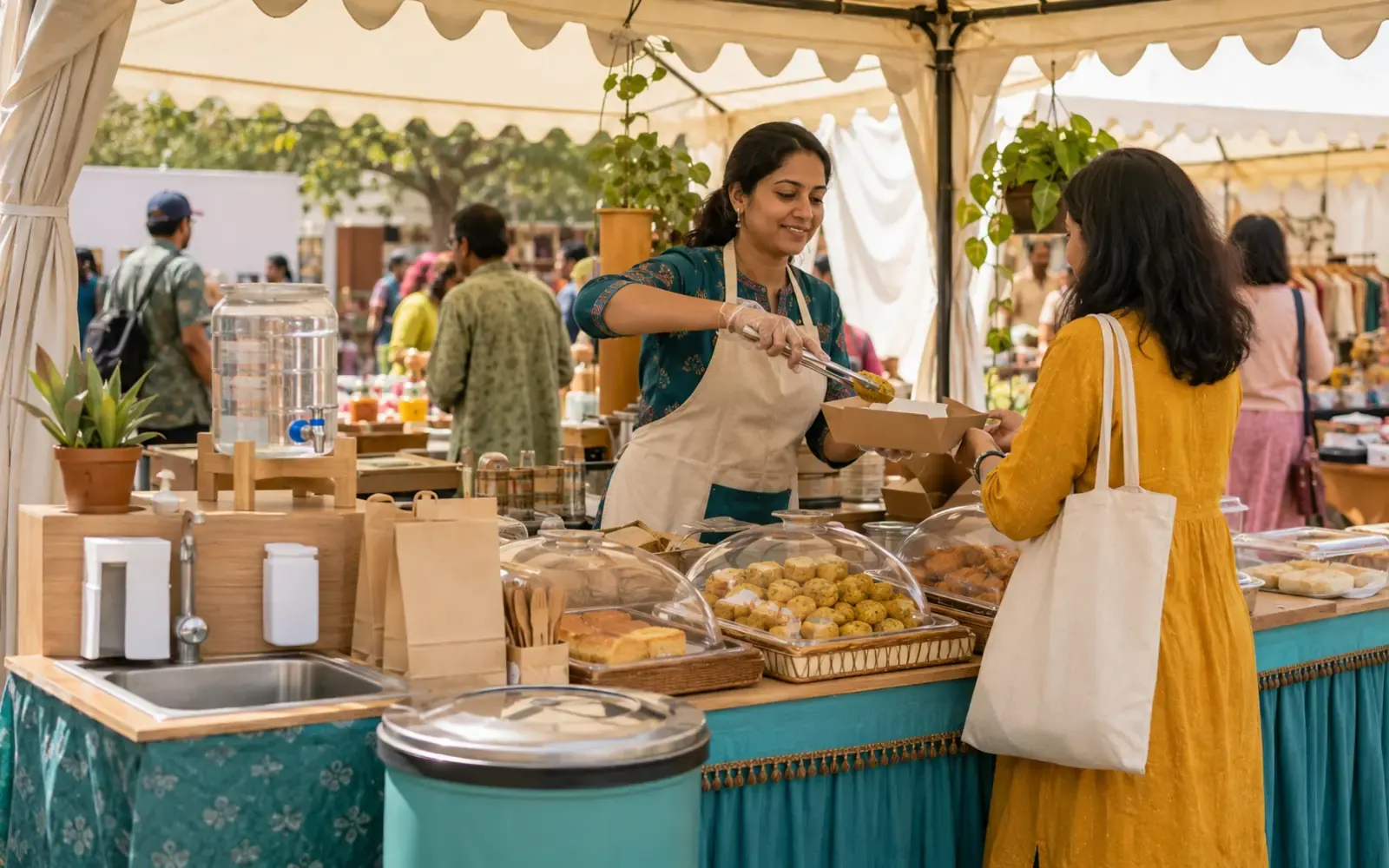
Food stalls can add energy and variety to flea markets, exhibitions and community events. They can also be operationally demanding. Vendors must serve customers quickly while keeping food safe, the counter clean and the stall organised.
Good preparation reduces delays and helps build customer confidence. Use this checklist as a planning guide and confirm the specific rules for your business, venue and event.
Important: Food-business requirements can change and may depend on what you prepare, package or sell. Check the current FSSAI/FoSCoS requirements and any applicable local, venue and organiser permissions before participating. This article is a practical checklist, not legal advice.
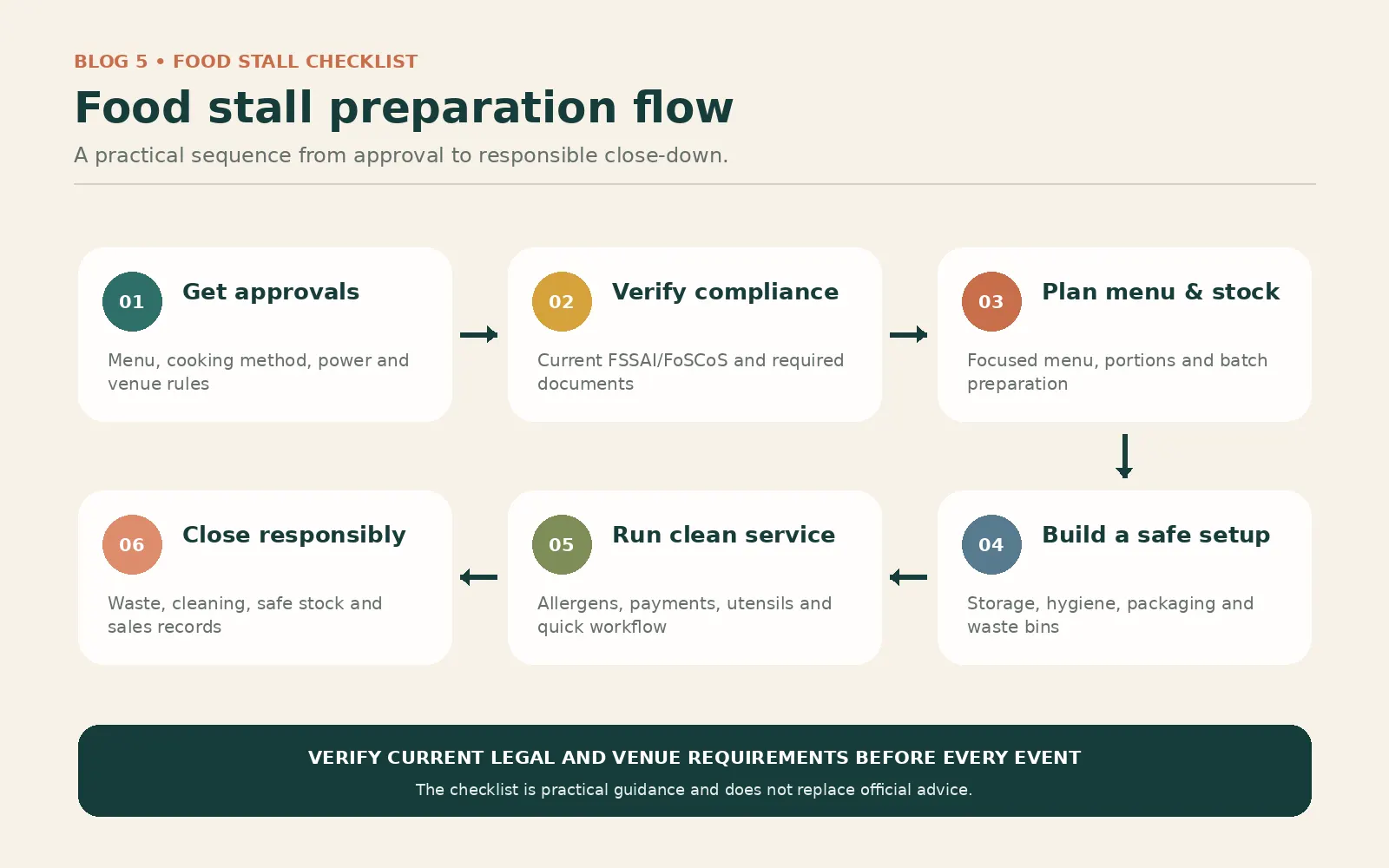
1. Confirm event and category approval
Before paying for a stall, tell the organiser exactly what you plan to sell and whether you will cook, heat, assemble or only display packaged products at the venue.
Confirm:
- Approved menu and food category
- Whether cooking is permitted
- Allowed fuel or heating equipment
- Electricity load and socket type
- Water availability
- Stall dimensions
- Waste-disposal arrangements
- Fire and safety restrictions
- Setup and unloading time
- Whether tasting samples are allowed
Do not bring unapproved cooking equipment or menu items. Venue rules may differ between residential communities, corporate campuses and open-air markets.
2. Keep registrations and documents ready
Food businesses should verify which FSSAI registration or licence applies to their activity through the official FoSCoS system. Additional local or venue permissions may also apply.
Keep digital and, where requested, printed copies of relevant documents. Depending on the product and event, these may include:
- FSSAI registration or licence details
- Business and identity information
- Product labels or ingredient information
- Staff or vehicle access information
- Equipment declarations
- Any organiser or venue approval
Apply well in advance. Do not assume that a temporary event removes normal food-business responsibilities.
3. Build an event-friendly menu
A short, focused menu is usually easier to execute than a long one. Choose products that can be prepared, served and replenished safely within the event conditions.
A practical menu should have:
- A small number of clearly different items
- Ingredients that can be managed safely
- Fast assembly or service time
- Prices suited to the audience
- Easy takeaway packaging
- One or two signature products
- Realistic stock requirements
Avoid adding complicated items simply to create variety. Slow service, inconsistent portions and excessive waste can reduce profitability.
4. Plan safe preparation and transport
Prepare food in an appropriate, clean environment. Protect ingredients and finished items during transport using clean, food-grade containers.
Plan how you will:
- Separate raw and ready-to-eat foods
- Prevent leaks, dust and handling contamination
- Maintain safe storage conditions
- Transport chilled or hot items appropriately
- Refill the stall without leaving food exposed
- Identify the preparation time or batch where necessary
Do not sell food that has been stored outside safe conditions or whose quality is uncertain.
5. Set up a hygienic service area
Your food counter should be easy to clean and organised to prevent cross-contamination. Bring enough supplies for the complete event.
Useful items include:
- Cleanable table coverings or food-contact surfaces
- Covered food-grade containers
- Tongs, scoops and serving utensils
- Handwashing or hand-cleaning supplies appropriate to the setup
- Food-safe surface cleaner and disposable cloths
- Gloves where appropriate to the task
- Hair restraints and clean aprons
- Lidded waste bins and liners
- Paper towels or tissues
- Separate containers for cleaning materials
- Pest and dust protection where needed
Gloves do not replace hand hygiene. Change them between incompatible tasks and whenever they become contaminated.
6. Separate food handling and payments
Cash, phones and payment devices are handled frequently and can contaminate food-contact surfaces. If possible, assign one person to payments and another to food.
If one person must handle both, create a clear process for hand cleaning and utensil use. Display your UPI QR code where customers can scan it without reaching over the serving area.
7. Display clear product information
Customers should be able to understand the menu and prices quickly. Display:
- Product names
- Prices
- Vegetarian or non-vegetarian identification where applicable
- Important ingredient or allergen information
- Portion or pack size where useful
- Storage or consumption instructions for takeaway products
Pre-packaged products must carry the information required under the rules applicable to that product. Do not make health, nutrition or medical claims unless they are permitted and supportable.
8. Choose practical, food-safe packaging
Packaging should protect the food and remain easy to carry around the event. Test containers before the event for leaks, heat, condensation and portion fit.
Carry:
- Food-grade containers, cups or wrappers
- Secure lids
- Napkins and appropriate cutlery
- Carry bags where needed
- Labels or stickers for packaged products
- Separate packaging for sauces or wet accompaniments
Avoid oversized packaging that increases cost and waste. If you promote eco-friendly packaging, make sure the claim accurately reflects the material and disposal method.
9. Prepare equipment and backup supplies
Create an equipment list based on your menu. It may include:
- Serving tools
- Approved cooking or heating equipment
- Extension boards approved for the venue
- Cool boxes or insulated carriers
- Thermometers appropriate to your operation
- Menu boards and price cards
- Lights, if permitted
- QR payment stand and charged phone
- Power bank
- Extra packaging
- Basic repair supplies such as clips or tape kept away from food
Confirm electrical capacity before bringing high-load appliances. Never overload a connection or use unsafe wiring.
10. Estimate stock and portions
Use expected attendance only as a guide. Consider event duration, audience type, competing food stalls, weather and product shelf life.
Prepare stock in manageable batches when possible. Keep a small record of:
- Units prepared
- Units sold
- Samples served
- Wastage
- Peak selling time
- Best-selling products
This data will improve your next event plan and help prevent overproduction.
11. Train your stall team
Everyone working at the stall should know:
- The menu and prices
- Ingredients and common allergen questions
- Hygiene procedures
- Safe equipment use
- Portion sizes
- Payment process
- Waste and cleanup rules
- Who to contact if a problem occurs
Keep communication calm and professional during rush periods. A short menu and clearly assigned roles can make service much faster.
12. Close the stall responsibly
At the end of the event:
- Stop serving at the instructed time
- Dispose of waste in the designated area
- Do not pour oil or food waste into drains
- Pack usable stock safely
- Remove decorations and equipment
- Clean the allotted space
- Report any damage or safety issue to the organiser
Leaving the stall clean supports good relationships with venues and organisers.
Final food-stall checklist
Before leaving for the event, confirm that you have:
- Written event and menu approval
- Current applicable registrations and documents
- Safe transport and storage arrangements
- Clean utensils and service supplies
- Food-grade packaging
- Ingredient, allergen and price information
- Approved equipment and electrical requirements
- UPI and backup payment options
- Waste bins and cleanup materials
- Trained helpers
- Emergency contact details
A memorable food stall combines taste with safety, speed, cleanliness and friendly service. Prepare the system as carefully as the menu.
MN Events works with food and beverage vendors at selected events across Hyderabad, subject to event theme, venue rules and category approval. This checklist works alongside our Vendor Participation Rules and Cancellation and Refund Terms.
To enquire about a food stall at an upcoming event, submit your product and brand details at mnevents.in.
Frequently asked questions
Do I need FSSAI registration for an event food stall?
Food-business operators should verify the registration or licence applicable to their activity through the current FSSAI/FoSCoS framework. Requirements can depend on the business type, scale and activity, so confirm before the event.
Can I cook food at the stall?
Only if the organiser and venue permit it and your setup meets applicable requirements. Confirm fuel, electrical load, fire safety, ventilation, water and waste rules in writing.
What should I do with unsold food?
Follow safe storage limits and applicable food-safety practices. Do not sell or reuse food if its safety or quality is uncertain.