
How to Choose the Right Exhibition Before Booking a Stall
MN Events · Sep 1, 2026
A busy venue does not automatically make an event suitable for every brand. Learn how to compare the audience, timing, category mix, facilities and organiser before reserving a stall.
Participating in an exhibition can help a small business generate sales, meet customers, test products and increase local awareness. However, the results depend heavily on choosing the right event.
A market that works well for one vendor may not work for another. Product type, price point, customer profile and event timing all matter. Before paying for a stall, use the following checklist to decide whether the opportunity suits your brand.
1. Define your goal for the event
Start by deciding what success means to you. Your main goal could be:
- Making direct sales
- Introducing a new product
- Finding repeat customers
- Collecting feedback
- Building awareness in a new part of Hyderabad
- Creating social-media content
- Connecting with corporate buyers or potential partners
Clear goals make it easier to select an event and evaluate the results afterwards. If your goal is immediate sales, customer buying intent and product fit may matter most. If you are launching a brand, visibility and conversations may also have value.
2. Understand the audience
Ask who will actually attend the event. Useful details include:
- Residents, employees or general visitors
- Families, students or working professionals
- Likely age group
- Typical spending range
- Expected peak hours
- Whether entry is controlled or open to everyone
Avoid relying only on estimated footfall. A smaller, relevant audience can produce better results than a large crowd with little interest in your category.
Match your product and price to the expected customer. Premium gifting, workwear and convenient lifestyle products may suit some corporate environments. Kids' products, home décor, food and festive shopping may perform well in family-focused community events. These are starting points, not guarantees, so evaluate each venue individually.
3. Check the event format and timing
Event timing affects sales. Corporate pop-ups may be busiest during lunch breaks and when employees leave work. Residential events may become active in the evening or on weekends.
Confirm:
- Event date and public or local holidays
- Vendor reporting time
- Customer-facing hours
- Number of days
- Indoor or outdoor format
- Weather backup plan, if relevant
- Whether you must remain open for the complete event
Choose an event that your team can manage comfortably. A long event may need additional staff, stock and meal breaks.
4. Review the category mix
Category curation can affect the customer experience and your sales potential. Ask how many vendors are expected in your category and whether similar products will be placed close together.
Some healthy competition is normal and can help create a strong shopping destination. Too many near-identical stalls, however, may divide demand. Explain your products clearly when applying so the organiser can assess category fit.
5. Calculate the complete cost
Do not compare only the booking amount. Include inventory, travel, helpers, stall presentation, packaging and payment costs. For a fuller breakdown of what typically shapes pricing, see How Much Does a Flea Market Stall Cost in Hyderabad?
Estimate your break-even point:
Break-even units = total event cost ÷ average profit per product
For example, if the total event investment is ₹10,000 and your average profit per item is ₹500, you need to sell 20 items to cover that investment. Use your real figures rather than expected revenue alone.
6. Confirm what the organiser provides
Ask for written information about:
- Stall dimensions
- Table, chairs and canopy
- Electricity and lighting
- Wi-Fi or mobile-network conditions, if known
- Security and overnight storage
- Parking and unloading
- Waste disposal
- Food-vendor requirements
- Promotional support
Knowing the setup in advance prevents last-minute purchases and display problems.
7. Assess the organiser's communication
Professional communication is an important sign. The organiser should be able to share the venue, date, timings, booking process, key rules and payment confirmation clearly.
Before transferring money:
- Verify the organiser's official website or social profile
- Use the stated payment method
- Request a receipt or confirmation
- Save event messages and documents
- Read the Cancellation and Refund Terms
Be cautious when event information is incomplete, constantly changing or supported by unrealistic promises.
8. Look at promotion — but keep expectations realistic
Ask how the event will be promoted. The plan may include social-media posts, community communication, office announcements, posters or direct outreach.
Promotion supports awareness, but it cannot guarantee attendance or sales. Vendors should also promote their participation to existing customers and followers. Share the date, venue, timings and a reason to visit your stall.
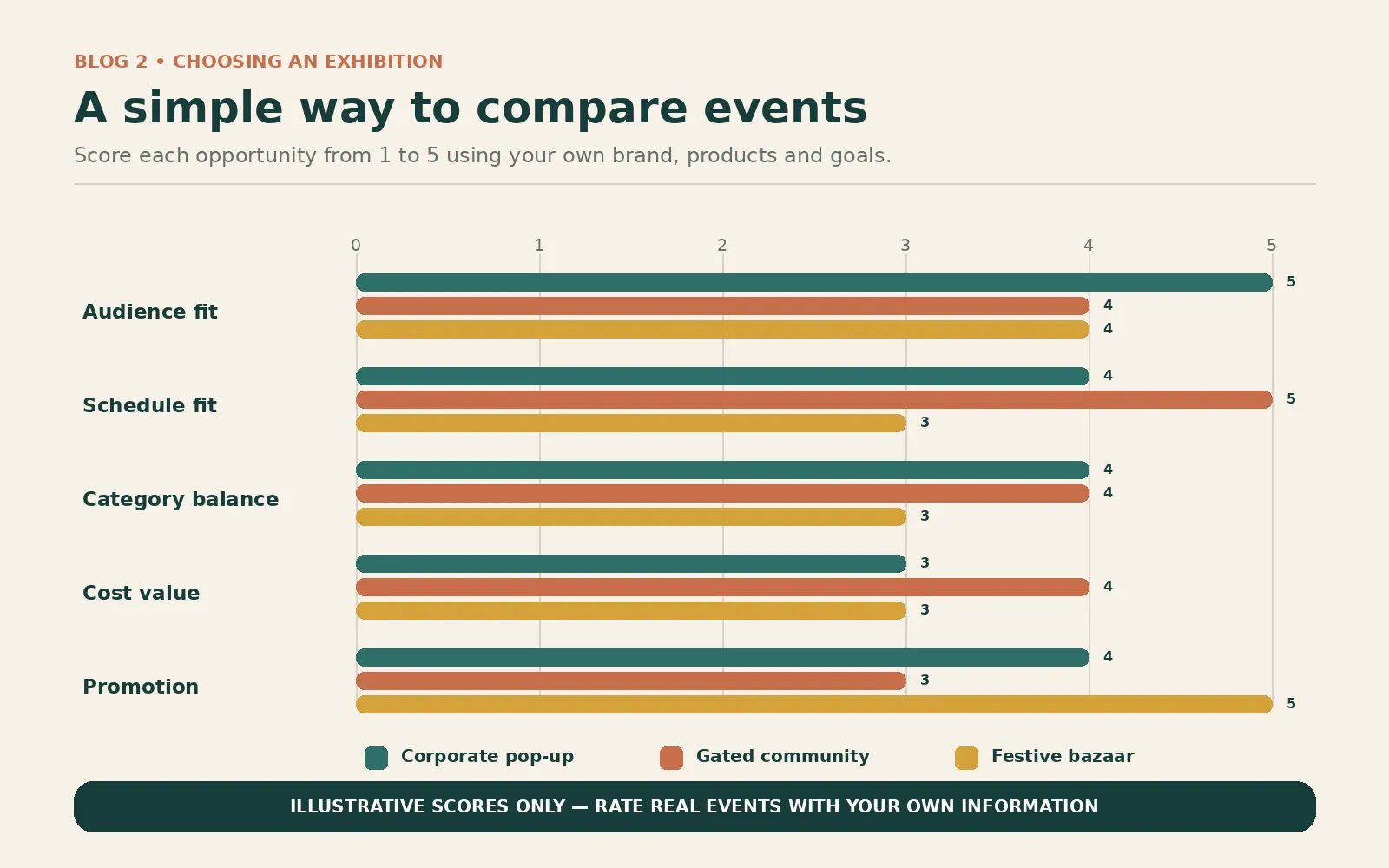
9. Prepare a simple event scorecard
Rate each opportunity from one to five on:
- Audience fit
- Venue fit
- Category balance
- Timing
- Cost
- Facilities
- Organiser credibility
- Promotional plan
This turns an emotional booking decision into a practical comparison. Keep your scores and actual results so you can improve future choices.
The right event fits your brand
An exhibition should connect your business with people who can realistically value and buy what you offer. Take time to understand the audience and terms before booking.
MN Events curates flea markets, corporate pop-ups and gated-community shopping experiences across Hyderabad. Vendors can explore upcoming events and submit their brand details through the MN Events booking page.
Find an event that fits your products at mnevents.in.
Frequently asked questions
How early should I book an exhibition stall?
Book early enough to plan stock, transport and display materials. Popular festive dates and limited categories may fill sooner than regular events.
Should a first-time vendor choose a one-day or two-day event?
There is no universal answer. A one-day event may require a smaller commitment, while a two-day event offers more selling time. Compare the total cost, staffing needs and audience opportunity.
Does high footfall guarantee good sales?
No. Sales depend on customer relevance, product appeal, pricing, presentation and many other factors. Treat footfall as one input rather than a guarantee.